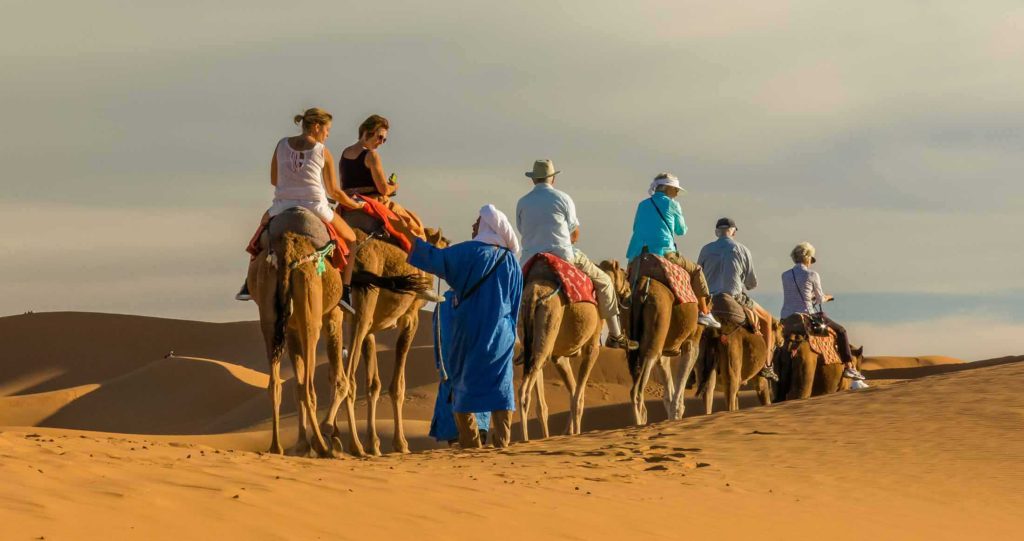
Somewhere between Marrakech and the Sahara, the road climbs over a mountain pass and drops into a valley lined with earthen fortresses. This is Morocco’s Kasbah Route, and its most famous landmark, Ait Benhaddou, has been standing for centuries. Here is what makes its architecture so remarkable, and what else to look for along the way.
What Is a Kasbah? (And How Is It Different From a Ksar?)
The two words get used interchangeably, but they mean different things. A kasbah is a single fortified residence, usually built by a wealthy trading family to house and protect them. A ksar is larger: a fortified village made up of several kasbahs enclosed within one shared defensive wall.
Ait Benhaddou, despite being commonly called “the kasbah,” is technically a ksar. Each of its major towers was once home to a different family, and together they form the walled settlement travelers visit today. Understanding this distinction makes the whole site easier to read once you’re standing inside it.
Ait Benhaddou: Morocco’s Most Iconic Ksar
Ait Benhaddou has been a UNESCO World Heritage Site since 1987, and it’s easy to see why. The entire structure is built from rammed earth, clay, straw, and wood, all sourced locally, with nothing imported from outside the region. It sits above the Ounila River, about 30 kilometers from Ouarzazate, at the foot of the Atlas Mountains.
For centuries, it served as a critical stop on the trans-Saharan trade route, where caravans carrying gold, salt, and spices would rest between Marrakech and the desert. Today, only a handful of families still live inside the ksar itself. Most residents relocated across the river decades ago, as tourism replaced trade as the local economy.
How the Architecture Works
Everything about Ait Benhaddou’s design served a defensive purpose. High outer walls and reinforced corner towers protected the settlement, while narrow, winding streets inside made it difficult for outsiders to navigate quickly. Ground-level windows are scarce, most light enters through skylights or small upper openings, a deliberate choice for security.
Look closely at the towers and you’ll notice geometric patterns worked directly into the mud brick, decorative but also structural, since the ridges help the earthen walls shed rain. The result is a building that looks like it grew out of the hillside rather than being built on top of it.
The Route of a Thousand Kasbahs
Ait Benhaddou is the most famous stop, but it’s only one point on a much longer stretch known as the Route of a Thousand Kasbahs. Starting from Ouarzazate, the route winds through the Dades and Draa valleys on its way toward the Sahara, crossing the Tizi n’Tichka pass through the High Atlas Mountains along the way.
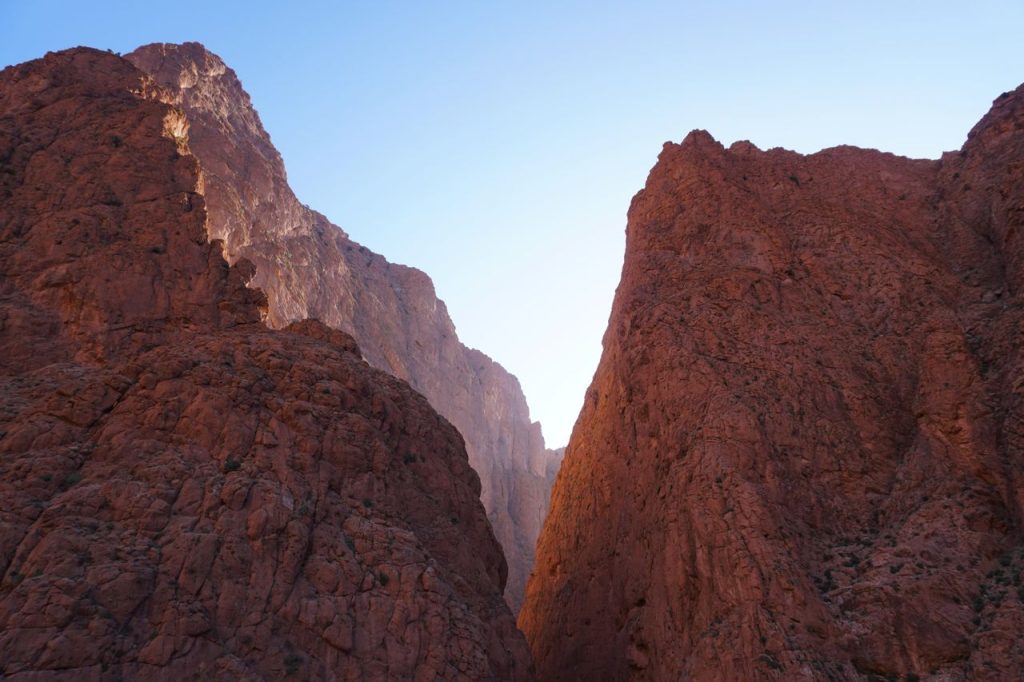
Along this road, you’ll pass Skoura’s palm groves dotted with crumbling and restored kasbahs, the Valley of Roses near Kelaat M’Gouna, and the dramatic cliffs of the Dades and Todra gorges. Each stop tells the same story in a different setting: fortified earthen architecture built by families who once controlled a piece of the Saharan trade.
Ait Benhaddou on Screen
Its striking, almost otherworldly look has made Ait Benhaddou one of the most filmed locations in North Africa, appearing in productions including Gladiator, The Mummy, and Game of Thrones. The same defensive architecture that protected traders centuries ago now makes for a dramatic backdrop that needs almost no set dressing.
Visiting Tips
Early morning and late afternoon light bring out the warm, golden tones of the earthen walls, and both are quieter than midday when tour buses arrive in force. Getting inside means crossing the river, either by a footbridge or, when water levels are low, on foot or by donkey across the riverbed. Pairing your visit with a stop in Ouarzazate makes sense too, the Atlas Film Studios and the Taourirt Kasbah are both close by and round out the day.
FAQ
Is Ait Benhaddou a kasbah or a ksar?
Technically a ksar, since it’s a fortified village made up of multiple individual kasbahs within one shared wall.
How old is Ait Benhaddou?
The site has roots going back centuries, with the current structures largely dating from the 17th century, though the location was inhabited well before that.
Can you still see people living inside Ait Benhaddou?
Yes, a small number of families remain inside the ksar, though most residents moved to the newer village across the river decades ago.
How far is Ait Benhaddou from Marrakech?
It’s roughly a 3 to 4 hour drive, making it a popular day trip or a stop on the way to the Sahara.
What other kasbahs are worth visiting along the route?
The Taourirt Kasbah in Ouarzazate, the kasbahs scattered through Skoura’s palm groves, and the fortified villages along the Dades Valley are all worth a stop.
Ready to Explore the Kasbah Route?
Walking through Ait Benhaddou means walking through centuries of Saharan trade history, one earthen wall at a time. Whether you have a single day or you’re continuing on toward the dunes, the Kasbah Route is one of Morocco’s most rewarding stretches of road.
Book our Ait Benhaddou day trip from Marrakech, combine it with our Ouarzazate and Ait Ben Haddou excursion, or continue the journey with our Merzouga desert tours. You can also browse all Morocco tours to find the itinerary that fits your trip.