
What to wear and pack for Morocco? Pack light, breathable layers that cover shoulders and knees, closed shoes you can walk in, a warm layer for desert nights and a little cash. That single sentence answers most of the questions travelers send us, from “can women wear shorts in Marrakech” to “what plug do I need.” The rest of this guide gives you the detail, in the order you will need it.
By Lahbib, Berber guide at Visit the Desert. Last updated 18 October 2026.
The Short Answer
Morocco is relaxed with tourists, but modest dress earns more respect and less attention, especially outside big resort areas. In the desert, practicality matters more than fashion.
- Clothes: loose cotton or linen, shoulders and knees covered where possible.
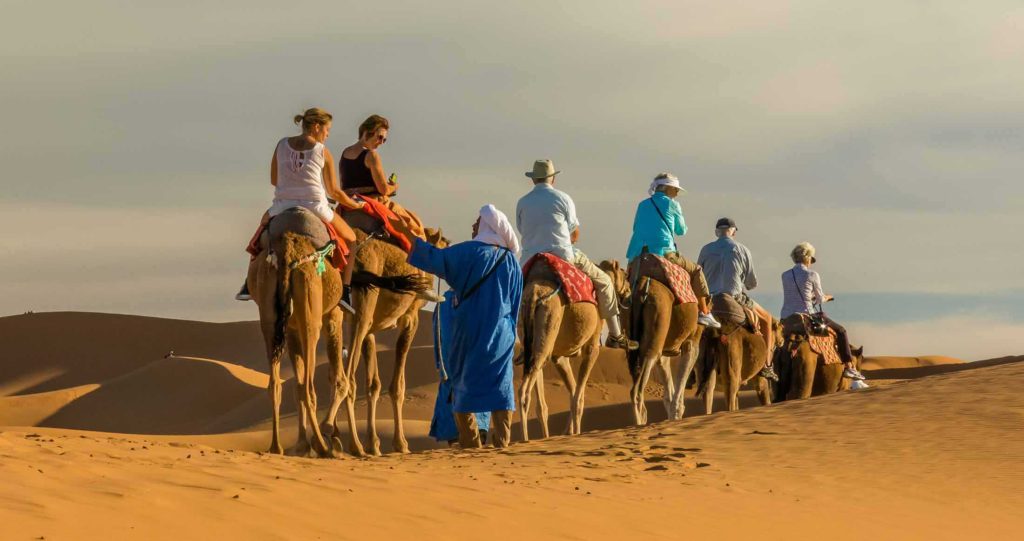
- Desert: a scarf or hat, sunglasses, a warm layer for the night, closed shoes.
- Electronics: Morocco uses type C and E sockets at 220V.
- Money: carry dirhams in small notes for tips, taxis and small shops.
- Water: drink bottled water.
Can Women Wear Shorts in Morocco?
Legally yes, but practically it depends on where you are. In tourist areas of Marrakech, Essaouira and Agadir you will see visitors in shorts and sleeveless tops. In smaller towns, medinas and rural areas, covered shoulders and knee-length or longer bottoms are more comfortable and reduce unwanted attention. Showing cleavage is generally not advisable. A light scarf is the most useful item in your bag: it covers shoulders in a mosque area, protects from sun and dust and doubles as a layer.
What men should wear
Men face the same logic. Long trousers or knee-length shorts and a t-shirt are fine in cities. In the medina and in villages, avoid very short shorts and sleeveless tops.
Holding hands and public affection
Public displays of affection are best kept discreet. Visiting couples holding hands is usually fine, but kissing in public is frowned upon. Same-sex relations are criminalized under Moroccan law, so LGBT+ travelers should check their government’s advice before travel. Our safety overview covers this in is Morocco safe to travel to right now.
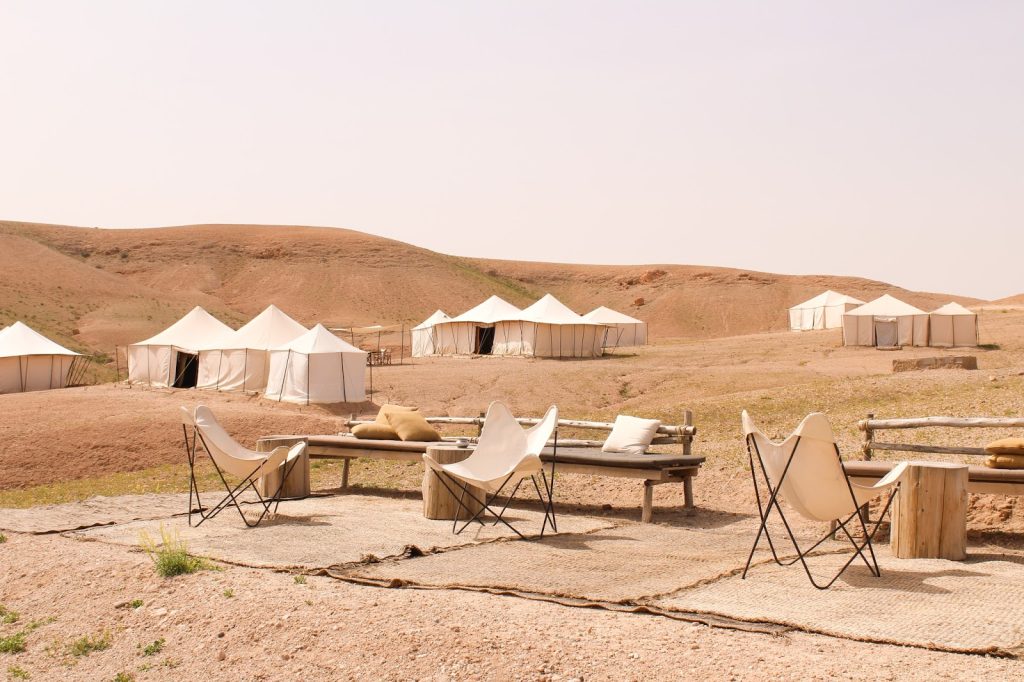
What to Pack for the Desert
The Sahara has strong sun by day and a sharp temperature drop at night, particularly in winter. Pack:
- A warm layer (fleece or jacket) for evenings and sunrise
- Closed shoes with grip for dune climbs, plus sandals for the camp
- A scarf or buff to cover mouth and nose in wind
- Sunglasses, a hat and sunscreen
- A headlamp or small torch for the camp at night
- A power bank: charging in camps can be limited
- A small daypack and a few zip-lock bags to keep sand out of cameras
- Wet wipes and hand sanitizer, as water is limited at camp
To decide which season to pack for, see the best time to visit the Moroccan desert. To prepare for the night itself, read about sleeping in a Berber tent.
Money: Cash or Card?
In Morocco you need both. Cards work in many hotels, restaurants and shops in big cities, but cash is essential in souks, small cafes, taxis and desert camps, and for tips. Withdraw dirhams before you leave a large town, because ATMs thin out in remote areas. For a rough sense of exchange rates, check a live converter before you travel, as rates move. As a rule of thumb, a US dollar has recently bought somewhere around 9 to 10 dirhams. A tip guide is in how much to tip in Morocco.
Power and Plugs
Morocco uses 220V and type C and E plugs. Bring a universal adapter and a small power strip, since riads and camps may have few sockets.
Water and Food: How to Eat Well and Stay Well
Tap water is generally not recommended for visitors. Drink and brush your teeth with bottled water if you want to be cautious, and avoid ice if you are unsure of the source. Ask about bottled water at your riad and camp.
For food, you do not need to be afraid. Eat where you see locals and high turnover, choose freshly cooked dishes and hot tagines, and peel fruit yourself. Many travelers eat salads in good restaurants, but if you have a sensitive stomach, start with cooked food for the first days.
What to try
- Tagine: slow-cooked stew with meat or vegetables.
- Couscous: traditionally served on Fridays.
- Pastilla: a sweet and savory pastry, often with pigeon or chicken.
- Harira: a tomato and lentil soup, common at Ramadan evenings.
- Mint tea: the national drink, often called Berber whiskey, always offered as a sign of welcome.
For health advice before you go, check the CDC page for Morocco and ask your doctor about vaccinations and medication. Planning a trip during the holy month? See Marrakech during Ramadan: good idea?.
What Not to Bring
- Drones: require authorization and may be confiscated at customs.
- Illegal drugs: penalties are serious, including for tourists.
- Valuables you do not need: leave expensive jewelry at home.
- Too many shoes: you will walk on uneven surfaces, so bring one or two comfortable pairs.
- Prescription medicine without paperwork: carry it in the original packaging with a doctor’s note.
FAQ
What should I wear in Morocco as a tourist?
Loose, breathable clothes that cover shoulders and knees, comfortable closed shoes and a scarf. In the desert, add a warm layer for the night.
Can a woman wear shorts in Marrakech?
Yes in many tourist areas, but long or knee-length bottoms are more comfortable and attract less attention, especially in the medina.
What travel adapter do I need for Morocco?
Morocco uses type C and E sockets at 220V and 50Hz, the same as most of continental Europe. US and UK visitors need an adapter.
Is it better to carry cash or card in Morocco?
Carry both. Cards work in many hotels and restaurants, but cash is needed for souks, taxis, tips and camps.
Can I drink tap water in Morocco?
Most visitors choose bottled water. If you have a sensitive stomach, avoid ice and tap water.
What is the national drink of Morocco?
Mint tea, served sweet and poured from a height.
Ready to Pack and Go?
You now know what to wear, carry and avoid. For a day out that tests your packing list on easy terrain, try the Ait Benhaddou day trip from Marrakech or the Essaouira day trip. Want to see the Atlas in a day? Take the Ouzoud waterfalls day trip.
About the author: Lahbib is of Berber descent and was born in the desert. He and his team at Visit the Desert plan private tours from Marrakech, Casablanca, Fes and Agadir.