

You have booked your Morocco desert tour. You have seen the photos of dunes glowing orange at sunset. But one question keeps coming back: what is it actually like to spend the night in a Berber tent? Is it comfortable? Is it safe? Will you even sleep? Here is everything to expect, from arrival to sunrise.
What Is a Berber Camp, Exactly?
Traditional Berber tents were built by nomadic tribes who needed shelter that could survive the desert and still be packed onto a camel the next morning. Woven from goat and camel hair, these tents kept families cool by day and warm by night, with no rigid structure beyond sturdy wooden poles.
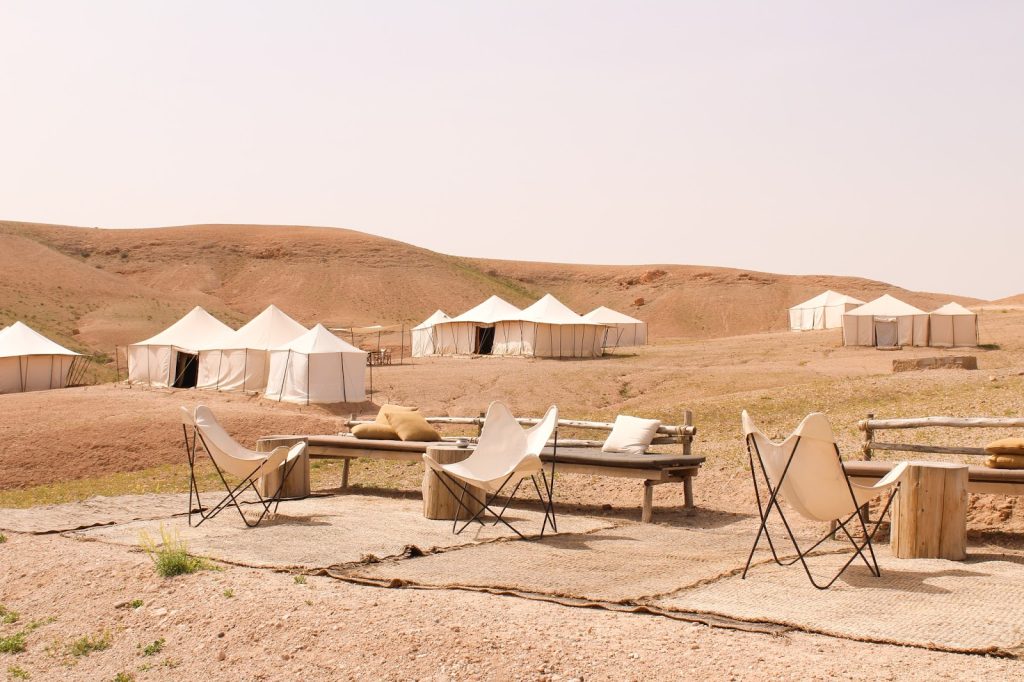
Today’s desert camps borrow that same look and spirit, but comfort levels vary. You will generally find two tiers: standard camps, which keep things simple and authentic, and luxury camps, which add private bathrooms, proper beds, and sometimes even electricity. Both give you the same sky, the same silence, and the same sense of being somewhere the modern world has not quite reached.


Arriving at the Camp
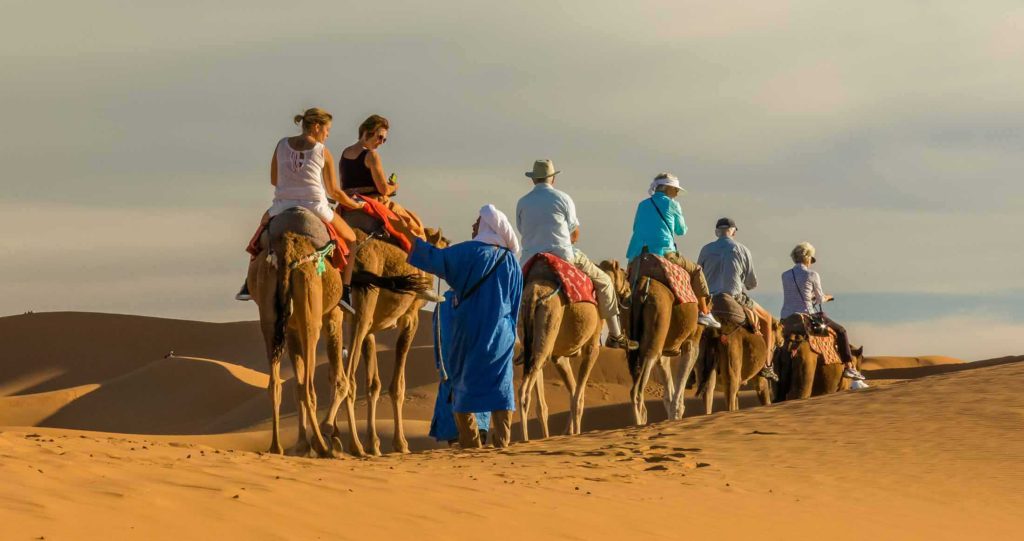
Most desert nights begin with a camel trek or a 4×4 ride into the dunes, timed so you reach camp right as the sun starts to dip. The first thing you will notice is the color: the sand turns from gold to deep orange to red as the light fades.
You will be welcomed with a glass of mint tea, poured the traditional way, and shown around a camp built from a cluster of tents circling a central fire pit and a larger dining tent. Colorful carpets cover the sand, cushions are scattered around low tables, and the whole setup feels more like a living space than a campsite.
Where you camp matters too. In Merzouga, camps sit at the foot of Erg Chebbi, known for its tall, dramatic dunes and easy access, which also means you will likely see other camps nearby. Further south, Zagora’s Erg Chigaga dunes are harder to reach, which keeps the camps more remote and private. Neither is better, it depends on whether you want convenience or complete isolation.
Inside the Tent: Comfort Level
Standard Camps
Expect a real mattress, blankets, a pillow, and a small solar-powered light. Toilets and washing facilities are usually shared and located a short walk from your tent. It is simple, but far from rough camping. You will not be sleeping on the sand.
Luxury Camps
Luxury desert camps raise the bar considerably: a proper bed, an en-suite bathroom, Berber-inspired decor, and sometimes air conditioning or heating depending on the season. It is worth being honest here. Luxury camps are comfortable, but they are still tents in the middle of the Sahara, not resort suites. The charm is in the contrast.
Evening at the Camp
Dinner is served as the sky darkens, usually a tagine or harira soup followed by fresh fruit and more mint tea, shared around a communal table. Afterward, the real show begins. Berber guides bring out drums, and the fire pit fills with music and singing that can go on for as long as everyone wants it to.
Once the fire dies down, look up. With no light pollution for miles, the Sahara sky reveals itself in full: a dense band of stars, the Milky Way clearly visible, and a stillness that is hard to describe until you have felt it.
Sleeping Conditions and What to Pack
Here is what surprises most first-timers: the desert gets cold at night, even after a scorching day. In winter, temperatures can drop close to freezing. Pack layers, including something warm for sleeping, and do not rely on daytime heat as a guide for what you will need after dark.
A few practical additions make a real difference: warm socks, a light scarf or buff for wind and sand, and a small headlamp for walking around camp after dark. Beyond that, you will need very little. Part of the experience is realizing how little you actually need out here.
Is It Safe and Comfortable for Everyone?
Desert camps welcome a wide range of travelers, and most are set up with that in mind. Families with children will find the routine, camel ride, dinner, music, sleep, easy for kids to enjoy, and staff are used to accommodating younger guests. Solo travelers are common too, especially in group camps where dinner and the fire pit naturally bring people together.
If mobility or extra comfort is a concern, luxury camps are the better fit, since they cut down on walking distances to bathrooms and offer sturdier bedding. Whatever your situation, it is worth mentioning it when booking so your camp and transport can be matched accordingly.
FAQ
Do Berber camps have bathrooms?
Yes. Standard camps have shared toilet and washing facilities nearby. Luxury camps typically include a private en-suite bathroom in the tent.
Is it cold at night in the Sahara?
Often, yes. Days can be hot while nights turn cold, especially between November and February. Pack warm layers regardless of the season.
Can you shower at a desert camp?
Most camps offer basic shower facilities, and luxury camps include private showers in the tent. Water pressure and warmth may be simpler than what you are used to at home.
Is one night enough, or should you stay two?
One night is enough to experience the sunset, dinner, music, and sunrise. A second night suits travelers who want a full rest day in the dunes with no driving.
What is the difference between a standard and a luxury desert camp?
Standard camps offer simple, authentic comfort with shared facilities. Luxury camps add private bathrooms, upgraded bedding, and sometimes air conditioning or heating, while keeping the same traditional setting.
Ready to Spend a Night in the Sahara?
A night in a Berber tent is not about luxury, it is about the contrast: heat and cold, noise and silence, a busy day and a sky so full of stars it feels unreal. Whether you choose Merzouga or Zagora, standard or luxury, the experience stays the same at its core.
Browse our Merzouga desert tours or Zagora desert camps to find the night in the Sahara that is right for you.